


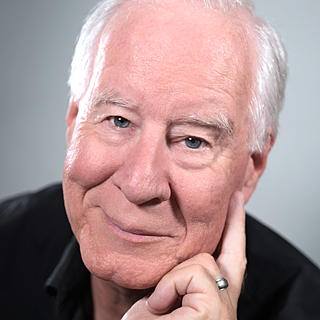
Updated: Jul 21

My writing goals have changed considerably over the years--or perhaps they've finally arrived back at the starting point, but now with hard-won experience behind them.
I contracted the writing bug very early (it’s a virus, isn’t it?), and I knew my fondest goal was to make people laugh and cry from something I’d written. In my younger days, I wanted to be remembered as one of those writers who added something worthwhile to people’s lives.
I started as a poet in college. I’m an older guy, so those were the original protest years — the years of singing anti-war songs and reciting poetry to each other. Eventually, I realized that few poets ever made a living writing verse. Then I was sure that screenwriting was the way to go. I worked (infrequently) in the television industry in LA and marveled at what they paid me when I sold something, and then grinned when they paid me again, for no extra writing, when it went into reruns. (Yes, of course I had another job that paid reliable money on a predictable basis — didn’t we all?) I had a writing partner in those days. We had agents (over time, we went through a number of them). Back then, we had the foolish thought that if we could come up with the right idea (within the limits of our own morals) and pitch it to the right producer, we’d be allowed to write something wonderful that would make people laugh and cry (and make money). The order of events seems odd to me now.
My early self really thought the idea was the king — you know, the twist, the surprise, the never-before-thought-of situation that makes for a collectible poster. In my former mind, the characters, plot, dialogue, relationships, and stakes all came later. Looking back at that brown-haired, high-hoped younger guy from the vantage point of my white-haired, understated current self, I think it’s probably a good thing that he never succeeded back then.
So, what happened to me? Well, I went from screenwriting in California to writing and directing scripts for a multi-national corporation based in Minnesota. The engineering company thought my Hollywood background was a plus. Good for them. I flaunted that dubious reputation to the hilt and managed to remain employed for thirty years, turning their stodgy, derivative corporate communications into something fresh, funny, exciting (once in a while), and even touching (on occasion). I wrote shelves full of material over a long career, and the one thing the projects had in common was limits. I learned that you’re never more creative than when you must work within highly restrictive boundaries. Limits force creativity to either flourish or expire. One of my fondest-remembered compliments came from the CEO after a highly successful global meeting rife with AV, graphics, and pizzazz. After the finale and the stand-up applause had faded away and we were tearing down, he found me and said, “We need people like you in this company, just not too many.”
Did those years satisfy my inner yearning to make people laugh and cry? No. Did anyone remember me as adding something valuable to their lives? Maybe, once in a while, but ultimately, no. A part of me felt that by helping to sell widgets, I wasted my gift as a writer. On a positive note, I supplied income and health plans to my family, which was my main job at the time, whether it fulfilled me or not.
I’m retired now. While working, I continued to write screenplays and futilely sent them to my dated Hollywood contacts. A friend used to observe that clinging to such hopes was like balancing a four-by-four on your shoulder all the time; it makes every single activity in life harder. As I approached retirement, I realized that novel writing could provide an economical way to get what I wanted. After all, I already owned a pen. And imagination is free. Why did it take me so long to have such an epiphany? I’m a slow learner and stubborn — doubly hampered.
By then, I realized that my writing goals had changed. My whole view of the endeavour had altered. I finally understood that writing is a gift that some people have, and the vast majority of the rest do not. By writers, in this context, I mean my type of scribblers — the ones who write novels, not poems, not plays, not the other stuff.
This writing gift of mine, which has changed over time and hopefully matured, is meant to be used on behalf of those brothers and sisters of mine who cannot write but who want to read about themselves. I have always treasured the quote from C.S. Lewis. “We read to know that we are not alone.”
I think I’m healthier now. I’m more prepared to create stories that matter. I hope people will still laugh and cry when they read something I’ve written, and I hope they take away value from my books. I no longer care much about the money, the fifteen minutes of notoriety, or the rest of my dusty hopes. It’s enough to imagine a reader finishing one of my books, closing the back cover with a sigh, and whispering, “That was pretty good.”


