


The Weight of a Blank Page: Why We Hide Our True Selves
Updated: Jun 23
A Peek Inside Her Lost Diary
INTRODUCTION:
Imagine packing your entire life into a single suitcase and walking away from your own name. Not metaphorically—literally: clothes, shoes, toiletries, a stack of diaries, and IDs that belong to someone who doesn't exist. What does that do to a person's soul?
This is the emotional premise at the heart of Her Lost Diary. Before the thriller mechanics kick in, before the cartel shadows lengthen across the page, the novel opens with something far more intimate and devastating: a young woman named Esteffi is shaken awake and forced to become someone called Sara. The book asks, quietly but insistently, what it costs to wear another person's name every single day.
This post isn't about plot twists or chase sequences—it's about the emotional landscape the novel builds before any of that begins. It's about the exhaustion of hiding, the loneliness of survival, and why the fear of being truly known is one of the most universal human experiences fiction can explore.
THE EXHAUSTION OF THE ORDINARY:
There is a particular kind of fatigue that Her Lost Diary captures with surgical precision—the fatigue of performing normalcy. For Esteffi, the diary writer, every mundane interaction carries a hidden tax. A coworker asks about her weekend trip. A friendly postman recognizes her face. A customer calls her by name—the wrong name, the false name, the name she has rehearsed but never owned.
Each of these moments, so small and forgettable for everyone else, requires her to calculate, deflect, and perform. It’s an act of theater, not real life. The book shows how much energy the ordinary demands when you’re hiding. Esteffi doesn't just work in a gift shop—she survives it. Every smile is a tiny piece of acting. Every answer to "Where are you from?" is a controlled detonation. The text makes you feel the claustrophobia of a false identity, not through dramatic confrontation, but through the relentless accumulation of small moments that should be nothing but are, for her, everything.
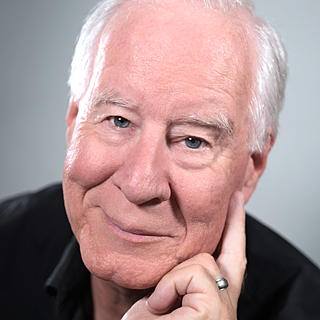
As a writer with definite introvert tendencies, when I’m confronted by the unavoidable public moment of introducing myself to strangers, I am sorely tempted to make things up. I picture a new name, imagine wildly unusual occupations and histories, and consider travel and adventure—you name it. There’s always an awkward pause and a disconcerting stare as they wait, before I chicken out and barely manage to mumble my own name.
I think this is what makes the book's emotional hook so effective. We all want to be someone else, but deep down, we recognize Esteffi's exhaustion in always having to keep the facade safely in place. Most of us have worn a version of a false self—at a job, in a relationship, or in a family—and felt the particular drain of it after a while. In the novel, all I did was turn the dial to its most extreme setting.

THE ISOLATION OF SURVIVAL:
Survival is not the same as living. Her Lost Diary understands this distinction with uncommon clarity. Esteffi has done everything right. She has a job. She has an apartment. She has a neighbor who waves and a coworker who cares. By every external measure, she is functioning.
But the novel keeps returning to a quieter, harder truth: she is profoundly alone. Not because no one is around her, but because no one is allowed to see her for herself.
The book's most quietly devastating scene involves a nativity set in a back storeroom. Esteffi, sitting cross-legged on the floor, cradles small ceramic figures—wise men and shepherds—weeping in a way she cannot do anywhere else. It is not a dramatic breakdown. It is the opposite: a private collapse, hidden behind curtains, triggered by something as simple as a childhood memory of the same set in her family's home.
The scene draws its power not from what is said, but from what has been held back for so long that even a ceramic shepherd can break the dam. This is the emotional texture the novel returns to again and again. Esteffi's isolation is not the isolation of someone without people—it is the isolation of someone who cannot let people in. Every connection she makes is shadowed by the knowledge that it is built on a lie. Her name is a lie. Her past is a lie. And the closer someone gets, the more dangerous the truth becomes.
How many of us have felt the loneliness of being surrounded by people who know our name but not our story? The novel gives that feeling a face, a voice, and a suitcase full of diaries.
CONCLUSION:
True freedom, Her Lost Diary suggests, isn't simply escaping danger. It's the ability to exist without pretending. It's hearing your own name spoken aloud by someone who understands what it means.
Esteffi's journey is, at its core, a story about the weight of a blank page—the terrifying and liberating possibility of writing yourself back into existence. The novel builds that emotional architecture with care, grounding every thriller beat in something deeply human: the longing to be known, the cost of hiding, and the quiet courage it takes to stop.
If this exploration of Esteffi's inner world has you curious about what she carries, what she discovers, and whether she ever gets to become herself again, Her Lost Diary is waiting.
Here's a question to sit with before you read: If you had to leave tonight with only one suitcase, what is the one item you couldn't leave behind? Whatever your answer, I suspect Esteffi would understand.

Comments